Have you ever bought a beautiful new journal, opened the first page, picked up your pen… and then had absolutely no idea what to write?
You’re definitely not the only one.
Journaling sounds simple until you actually sit down to do it. Suddenly, your mind goes blank. You start wondering whether you’re supposed to write about your day, your goals, your feelings, or something deep and meaningful.
Here’s the good news: there is no perfect way to journal.
You don’t need beautiful handwriting. You don’t need to write three pages every morning. And you definitely don’t need to have an interesting life to have something worth writing about.
If you have been wondering how to start journaling for beginners, especially when you don’t know what to write, this guide will help you make journaling simple, useful, and actually enjoyable.
And with a fresh year approaching, there’s no better time to create a habit that gives you a little more space to think.
*This post contains affiliate links. Please read the full disclosure here.
Let’s begin…
What Is Journaling, Really?
Journaling is simply putting your thoughts into words. That’s it!
It can be a place to process a difficult day, plan your goals, write down something you are grateful for, complain about something that annoyed you, celebrate a tiny win, or untangle the fifty thoughts bouncing around your head.
Some days you might write a whole page. Other days, you might write three sentences. Both count.
The point of journaling isn’t to create something impressive. The point is to give your thoughts somewhere to go.
How to Start Journaling When You Don’t Know What to Write
The easiest way to start journaling is to stop expecting yourself to have something profound to say.
Your first journal entry can literally begin with:
I don’t know what to write today.
Then continue from there.
Why don’t you know what to write? How are you feeling? What happened today? What are you thinking about right now? One sentence often leads naturally to another.
Try this:
I don’t know what to write today, but lately I have been thinking about… and just keep going.
You may be surprised by what comes out once you stop trying to make your journal sound “good.”
1. Start With Just Five Minutes
One of the biggest journaling tips for beginners is to start much smaller than you think you need to.
Don’t tell yourself:
I’m going to journal for 30 minutes every single day.
That sounds wonderful on January 1st but by January 12th? Maybe not so much.
You don’t need anything fancy to begin, either. A simple lined journal or notebook that feels nice to write in is more than enough. Keep it somewhere you will actually see it, set a timer for five minutes, and start writing.
Write until the timer goes off. If you want to continue, great. If you don’t, close your journal and move on with your day.
A five-minute journaling habit is much easier to maintain than an elaborate routine you eventually start avoiding.
Consistency matters more than length.
2. Use Simple Journal Prompts for Beginners
When your brain gives you absolutely nothing, prompts are your best friend.
And if coming up with your own prompts still feels like work, a guided journal with prompts can make starting much easier because the question is already waiting for you when you open the page.
You don’t need complicated questions designed to uncover the meaning of life before breakfast. Start with things you can actually answer.
Here are a few easy journal prompts for beginners:
- How am I feeling today, really?
- What has been on my mind lately?
- What am I looking forward to?
- What is stressing me out right now?
- What went well today?
- What do I wish I had more time for?
- What is one thing I’m proud of myself for?
- What do I want to let go of?
- What would make tomorrow a little better?
- What do I need more of in my life right now?
Pick one question and answer it. You don’t need to work through the whole list.
3. Write About Your Ordinary / Daily Life
A common reason people struggle with what to write in a journal is because they think their entries need to be interesting.
They don’t.
Your ordinary life is enough.
Write about the coffee you loved this morning. Write about the conversation you keep replaying in your head. Write about something you’re procrastinating on. Write about the book you’re reading, the money you’re trying to save, the habit you’re working on, or the person you miss.
You can even write:
Today was pretty normal, but…
Your journal isn’t a novel. Nobody is waiting for a plot twist.
4. Try a Simple “Three Things” Journal
If writing paragraphs feels intimidating, make journaling ridiculously easy.
Every evening, write down just three things:
- Something I’m grateful for – A quiet cup of tea before everyone woke up.
- Something on my mind – I need to stop putting off that project.
- Something I want to do tomorrow – Take a 20-minute walk after lunch.
Done!
If you like having a little structure instead of facing a completely blank page, a simple gratitude journal can work well for this too. Most give you a few short spaces to fill in each day, which makes the habit feel much less overwhelming.
This is one of the easiest ways to start a daily journaling habit because you always know what you are going to write before you even open the notebook.
5. Let Your Journal Be Messy
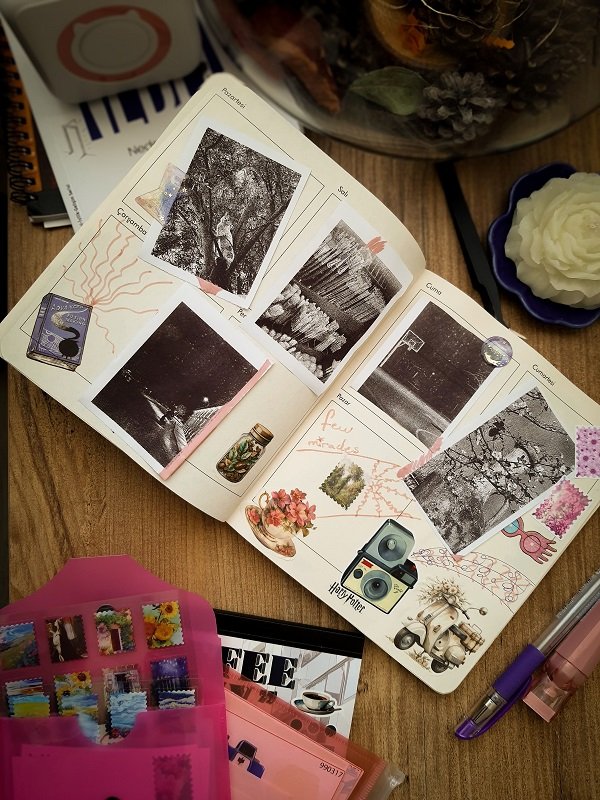
This might be the most important rule. Your journal does not need to be Pinterest-worthy.
- Cross things out.
- Change your mind halfway through a sentence.
- Write in terrible handwriting.
- Skip four days.
- Come back.
- Use different pens.
- Write one page today and two lines tomorrow.
A journal that looks imperfect but actually gets used is far more valuable than a gorgeous notebook you are afraid to touch.
Your journal is supposed to help you live your life — not become another thing you have to perform perfectly.
6. Journal About the Life You Want to Create
Journaling isn’t only about looking backward. It can also help you think about where you are going.
And as you move forward in life, take a moment to ask yourself – What do I actually want my life to feel like? Not just what you want to achieve.
Ask yourself – How do I want my days to feel?
- Maybe you want slower mornings.
- More confidence.
- Better money habits.
- Less scrolling.
- More movement.
- Stronger boundaries.
- More time for the people you love.
- A clearer sense of direction.
Write about it.
You don’t need to create a perfect five-year plan. Sometimes understanding what you want more of and less of is enough to start making better choices.
7. Make Journaling Part of Something You Already Do
If you are wondering how to make journaling a habit, don’t rely entirely on motivation.
Attach journaling to something that’s already part of your day.
For example:
Journal while drinking your morning coffee.
- Write for five minutes after brushing your teeth at night.
- Keep your journal next to your bed. Leave a pen there too. It sounds ridiculously simple, but removing that tiny “where did I put a pen?” step makes it easier to actually write. If you enjoy a smooth, fine-point pen, keeping a small set of journaling pens with your notebook can make the ritual feel a little more inviting.
- Write after making your daily to-do list.
The fewer decisions involved, the easier the habit becomes.
And keep your journal somewhere visible. If it’s hidden at the back of a drawer underneath three old chargers and a mystery cable nobody recognizes, you’re probably going to forget about it.
8. What If You Miss a Few Days?
Nothing happens. Seriously!
You haven’t failed at journaling. You don’t need to fill in the missing days or write a dramatic apology to your notebook. Just open it and start again.
One of the healthiest things you can learn while building any new habit is how to return without turning a small break into quitting altogether.
Missed yesterday?
Write today.
That’s enough.
9. A Simple First Journal Entry You Can Write Tonight
Still staring at that blank page?
Write today’s date and finish these sentences:
- Right now, I feel…
- Something that has been on my mind is…
- Something I’m grateful for today is…
- One thing I want to improve is…
- Tomorrow, I want to…
There.
You have started journaling. No fancy routine required.
So to Conclude:
Your Journal Doesn’t Need to Be Perfect
Learning how to start journaling when you don’t know what to write isn’t really about finding the perfect prompts or buying the perfect notebook.
It’s about giving yourself a quiet place to be honest.
Some entries will help you understand yourself better. Some will help you work through a problem. Some will simply record an ordinary Tuesday that you’d otherwise forget.
And some entries will be complete nonsense.
That’s okay too.
Start with five minutes. Start with one question. Start with one sentence if that’s all you have today.
The blank page becomes much less intimidating once you realize you were never supposed to impress it.
So are you Ready to Start?
Grab a notebook, open to the first blank page, and write today’s date.
Then answer just one question:
What has been on my mind lately?
Don’t edit yourself. Don’t worry about whether it sounds good. Just write.
And if you are heading into a new year wanting to become more intentional, save this post and come back whenever you feel stuck. Your journal doesn’t have to document a perfect life.
It can simply help you understand the one you are already living.
So grab that notebook, start with one honest sentence, and see where it takes you.
Here’s to growing gently, living intentionally, and creating a life that feels good to you.